Deploying a web app today is nothing like it was a few years ago. What used to mean renting servers and wiring up your own pipelines has turned into choosing between platforms that do most of the heavy lifting for you. That’s great for speed, but it also means each platform has its own opinion on how apps should be built and deployed.
Some aim to make frontend performance effortless, others double down on the simplicity of static-first sites, some tie you directly into massive cloud ecosystems, and newer options try to package everything, hosting and backend, into one stack. None of these approaches is wrong, but they shape your workflow in very different ways.
So the real question isn’t just “where do I host my app?”, it’s “what kind of experience (and bill) am I signing up for?” In this blog, we’ll break down Vercel, Netlify, AWS Amplify, and Appwrite Sites to see how each fits into the way developers are shipping web apps today.
Vercel: Think of Vercel as the framework-native host. It’s tightly coupled with Next.js, and its entire model revolves around serving modern frontend frameworks at the edge with minimal friction. Backend logic exists, but always as small serverless functions or external APIs.
Netlify: The Jamstack generalist. Netlify built its reputation on static-first workflows: push code, build, deploy, done. It doesn’t lean into any one framework, instead, it’s about a consistent, git-driven pipeline that works for React, Vue, Svelte, or plain HTML.
AWS Amplify: Amplify is built to connect your frontend with AWS services. It gives you hosting, but the main focus is making it easy to add things like authentication (Cognito), databases (DynamoDB), file storage (S3), and serverless functions (Lambda). Hosting is just one part; the bigger goal is tying your app into AWS’s cloud tools.
Appwrite Sites: The hosting platform built on top of Appwrite. It’s designed for deploying static sites and frontends that connect directly to Appwrite’s backend services like Auth, Databases, and Functions. Unlike Vercel or Netlify, which are hosting-first providers, Appwrite Sites is an extension of the broader Appwrite open-source backend platform, giving developers hosting plus a backend in one cohesive stack.
Appwrite Avatars now returns a profile photo for any user with one getPhoto call, resolving OAuth2 photos, Gravatar, Libravatar, and initials in order.
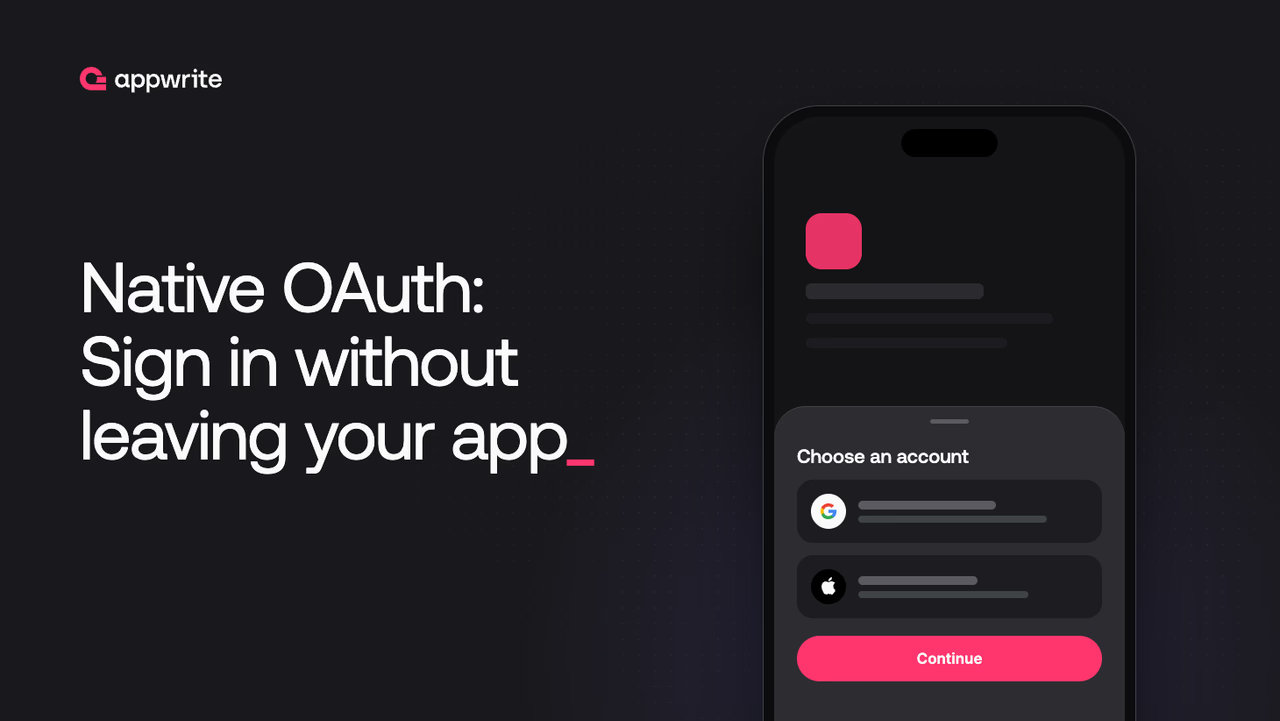
Your mobile app can now use the platform's own Sign in with Apple or Google account picker and exchange the ID token for an Appwrite session in one request, with no redirect through Appwrite.
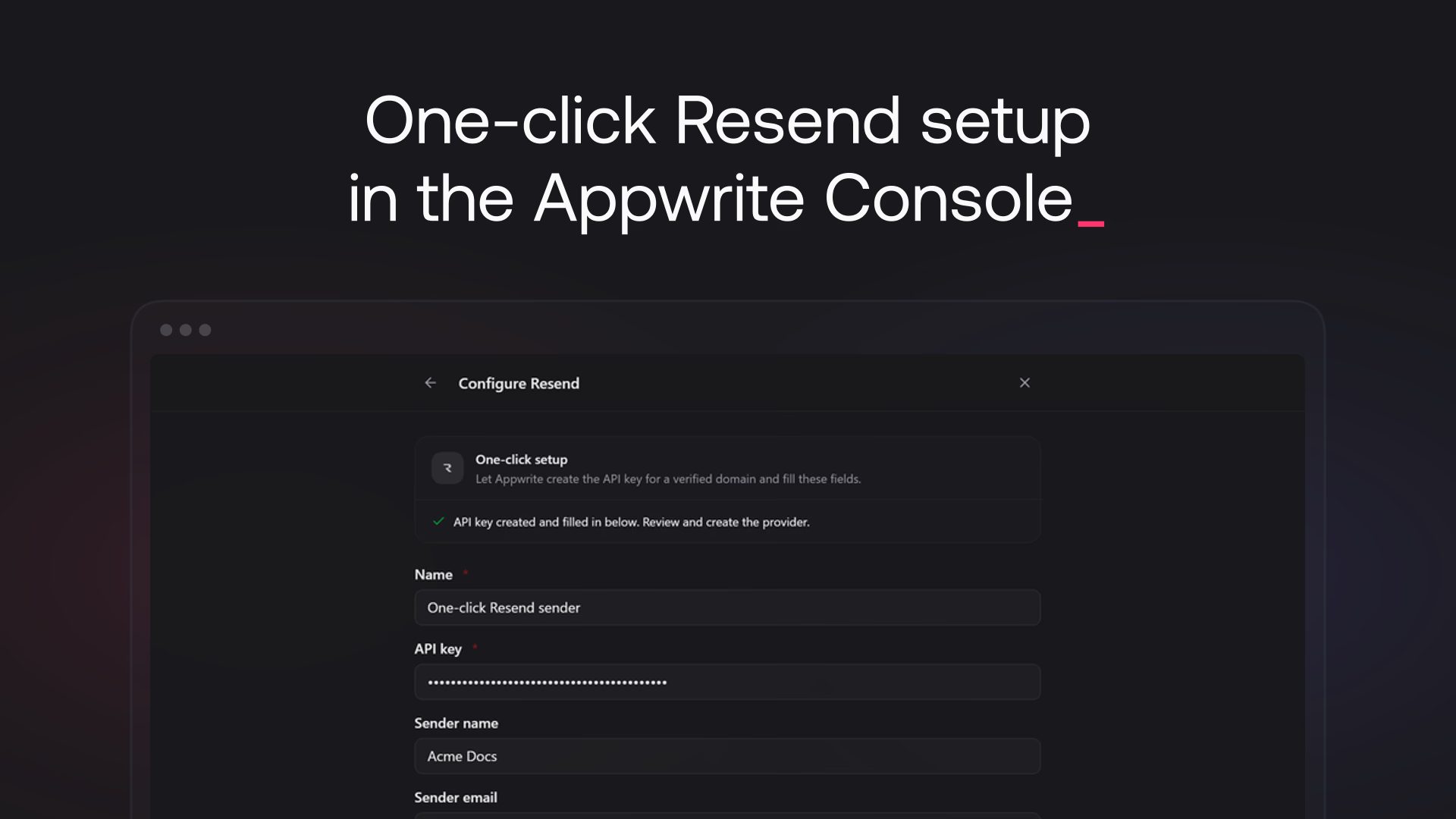
Connect Resend once and Appwrite creates a sending-only API key, fills in your project SMTP settings or Messaging provider, and enables it in one click.
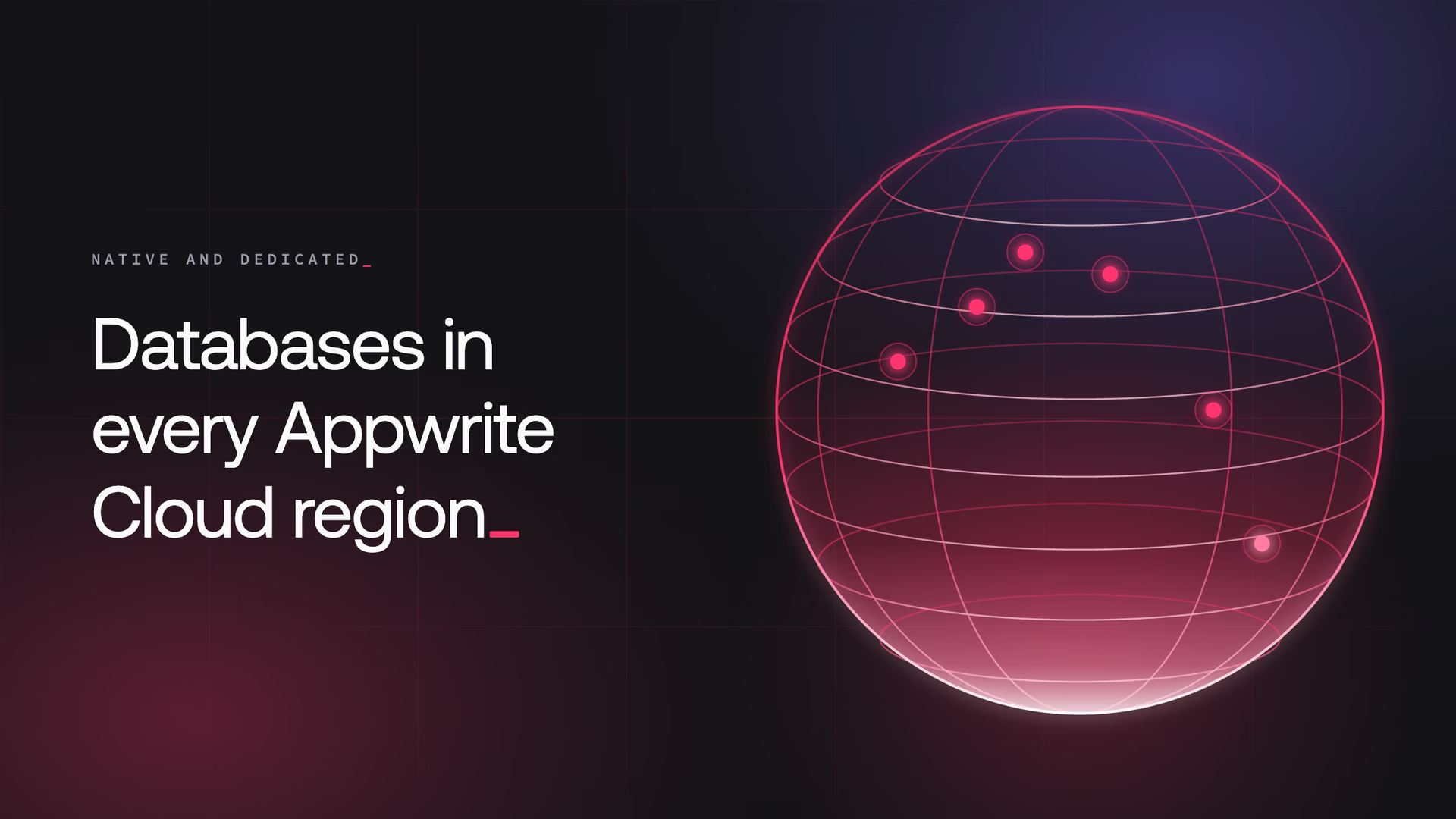
Native PostgreSQL, native MySQL, and dedicated TablesDB, DocumentsDB, and VectorsDB databases now run in all six Appwrite Cloud regions, with data kept in region.